
When people talk about sweet wines, they usually think of whites. However, sweet red wines also exist—a lesser-known style but one with a very distinctive personality.
A sweet red wine is one that retains part of the grape’s natural sugar after fermentation. In other words, not all the sugar is converted into alcohol, resulting in a wine with a rounder, smoother, and more enveloping mouthfeel.
Far from being a “simple” wine or one intended only for desserts, sweet red wine can offer levels of complexity, structure, and depth comparable to many dry wines.
Sweetness is not added. It always comes from the grape.
The difference lies in when fermentation is stopped or how the raw material is handled.
There are several ways to achieve this:
– Interrupting fermentation
The process is stopped before the yeasts transform all the sugar into alcohol.
This can be done by cooling or by adding alcohol (in fortified wines).
👉 This is the case for wines such as Port, Banyuls, or Maury, which tend to be more intense, structured, and higher in alcohol.
– Using overripe or dried grapes
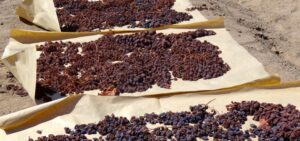
The grapes are left longer on the vine or dried after harvest, losing water and concentrating sugars and aromatic compounds.
👉 This method produces denser wines with greater richness and complexity. Example: Recioto della Valpolicella
– Partial fermentation without adding alcohol
Fermentation is controlled so that part of the sugar remains in the wine.
👉 The result is fresher, lighter wines with a more direct expression of fruit.
Although there are many different styles, they share a number of characteristics:
However, not all sweet red wines are the same:
Everything depends on the production method and origin.
Late harvest wines
Made from grapes that remain longer on the vine, encouraging sugar concentration.
They are usually well-balanced wines, where sweetness is combined with good acidity.
Wines from dried grapes
The grapes are dehydrated after harvest, further concentrating the sugars.
These are more intense wines, with greater body and complexity.
Fortified wines
Alcohol is added during fermentation to stop it.
These wines are more structured, higher in alcohol, and have great aging potential.
Examples:
Natural wines (unfortified)
Sweetness comes exclusively from the grape, without adding alcohol.
They are fresher, more accessible, and more fruit-driven.
In Spain, examples include wines made from Garnacha and Monastrell.
Experimental or signature wines
These are freer interpretations, where the winemaker combines techniques to create unique styles.
They tend to be less conventional and harder to classify.
Although often associated only with dessert, sweet red wines offer more possibilities:
They can also be enjoyed on their own, as an after-dinner wine.
Sweet red wine is a less common style, but one with a lot to offer.
It is not simply an easier or lighter wine, but a different way of understanding red wine.
¿Te ha gustado este artículo?