
One of the most fascinating aspects of wine is its ability to offer an enormous variety of aromas. From fruity and floral notes to hints of wood, spices, or even damp earth, aroma is one of the keys to understanding a wine’s personality. wine aromas
When we bring the glass to our nose, we are not just enjoying a pleasant smell: we are discovering the wine’s story, its grape variety, the climate where it was grown, and the winemaking process.
In this article, we will explore what wine aromas are, how they are classified, and how to learn to identify them easily.
Wine aromas are volatile aromatic compounds that are perceived through the sense of smell when we bring the glass closer or swirl the wine.
These compounds come from three main sources:
That’s why smelling a wine can reveal a lot of information about its origin and how it was made.
The three main types of wine aromas
In professional tasting, aromas are usually classified into three main categories.
Primary aromas come directly from the grape variety and the vineyard where it is grown.
They are fresh and natural aromas that evoke:
Common examples
These aromas are usually very intense in young wines, where fruit is the main focus.
Secondary aromas appear during the alcoholic fermentation process, when yeasts transform the grape’s sugar into alcohol.
During this process, characteristic aromas are generated such as:
These aromas are often found especially in wines made using specific techniques, such as sparkling wines or wines aged on lees.
Tertiary aromas appear when the wine ages in barrels or in the bottle.
These aromas are more complex and deeper.
Common aging aromas
The wood of the barrel and the length of aging have a strong influence on these aromas.
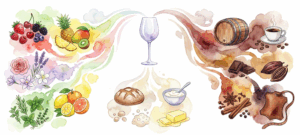
In addition to the previous classification, wine aromas are often grouped into aromatic families, which helps to identify them more easily during a tasting.
The most common are:
Apple, pear, cherry, plum, peach, or tropical fruits.
Rose, violet, orange blossom, or lavender.
Fresh grass, green pepper, tomato leaf.
Pepper, cinnamon, clove, or nutmeg.
Coffee, cocoa, caramel, or toasted bread.
Wet stone, chalk, or salinity.
These aromatic families help describe wine more precisely.
Recognizing aromas in wine is a skill that develops with practice.
Some useful tips are:
1. Smell before tasting
Aroma provides a large part of the wine’s sensory information.
2. Swirl the glass
Moving the wine releases more aromatic compounds.
3. Associate familiar aromas
Linking aromas to known fruits or spices makes identification easier.
4. Practice with different wines
The more wines you taste, the easier it becomes to recognize aromas.

Aroma directly influences the perception of flavor.
In fact, much of what we perceive as taste actually comes from smell. That’s why two wines with a similar composition can seem completely different if they have different aromatic profiles.
Aromas also allow you to:
Wine aromas are a gateway to its complexity and richness. From the fruity notes of a young wine to the deep aromas of an aged wine, each glass offers a unique sensory experience.
Learning to recognize aromas not only enhances the tasting experience, but also helps to better understand the origin, production, and personality of each wine.
The next time you have a glass in front of you, take a moment to smell it calmly. You may discover much more than you imagined inside it.
¿Te ha gustado este artículo?