
Did you know that much of the color in a red wine isn’t actually found in the grape juice? parts of the grape
The color is mainly found in the skin. The structure can also depend on the seeds. Even that thin whitish layer that looks like dust has a purpose.
Although it may seem like a simple fruit, every grape contains far more complexity than we might imagine. Each berry is made up of different parts that play a fundamental role in winemaking.
The skin, pulp, seeds, stem and even that thin whitish layer covering the grape contribute different characteristics that influence a wine’s color, aromas, structure and aging potential.
Understanding what happens in each of these parts is also a simple way to understand why the same grape variety can produce completely different wines.
If a wine has color, much of the credit goes to the skin.
This thin layer covering the grape contains the pigments responsible for the color of red wines, a large proportion of the aromas, and many of the tannins, compounds that provide structure, body and aging potential.
During fermentation, the must remains in contact with the skins to extract all these compounds. The longer this contact lasts, the greater the wine’s color intensity and structure.
Rosé wines are a good example. They are made from red grapes, but the must remains in contact with the skins for much less time than when making red wine. This shorter contact extracts fewer pigments, resulting in the characteristic pink tones.
Interestingly, if a red grape is pressed immediately after harvesting, the resulting must is usually almost colorless. The color appears when the juice remains in contact with the skins during maceration.
This means that the same red grape can produce wines with very different colors depending, among other factors, on how the contact between the must and the skins is managed.
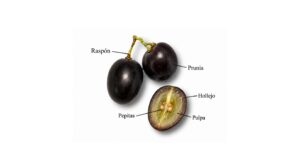
The pulp makes up most of the grape and consists mainly of water, sugars and natural acids.
During fermentation, yeasts transform these sugars into alcohol, while the acids provide freshness and balance to the wine.
Its composition changes as the grape ripens. Finding the right time to harvest means achieving the perfect balance between sugar, acidity and ripeness.
Did you know? There is one particularly surprising detail: the pulp of most grape varieties, both white and red, is practically the same color.
So how can a red grape produce a white wine?
Once again, the answer lies in the skin. If the must is quickly separated from the skin and there is hardly any contact between them, it is possible to make white wine from red grapes. One example is our wine El Cuentista.
Although they are small, seeds also play an important role in winemaking.
They are particularly rich in tannins and other phenolic compounds which, if extracted excessively during winemaking, can contribute bitterness and a sensation of astringency.
That is why balance is always sought during winemaking: taking advantage of what adds complexity without compromising the wine’s finesse.
But the seeds also provide useful information before the grapes reach the winery.
In the weeks leading up to the harvest, it is not only the pulp that is tasted. The seeds are also examined and can be chewed to assess their development.
Their color helps determine the grape’s stage of ripeness. When they still have greenish tones, they usually indicate less advanced phenolic ripeness. As they ripen, they gradually turn brown and the sensations they produce on the palate also change.
It often goes unnoticed, but the stem can also influence the wine.
It is the plant structure that holds all the grapes in the bunch and, although it is removed before fermentation in most winemaking processes, some wines include part of it to provide freshness, tension and greater aromatic complexity.
Its use depends on the style of wine being produced and its degree of ripeness at harvest.
Some wines are even fermented using whole bunches, meaning that the grapes remain attached to the stem during part of the process.
Why do this? Because when the stem is sufficiently ripe, it can become another tool for shaping the style of the wine, contributing a different aromatic expression and structure.
At Pradorey, one example is El Buen Alfarero, a wine in which we use stems during the winemaking process. Their presence is part of the winemaking decisions through which we seek to define the wine’s personality and final expression.
If you have ever looked closely at a freshly harvested grape, you have probably noticed a thin whitish layer covering its surface.
And no, it isn’t dust or dirt.
This coating is known as bloom and acts as a natural protection against dehydration and certain microorganisms.
In addition, numerous natural yeasts found in the vineyard live on this surface, some of which can participate in the fermentation of the wine.
An interesting detail is that this layer disappears easily when the grape is touched. It is neither dirt nor dust: it is part of the fruit’s own natural protection and a good example of just how much more complex a grape is than it might appear at first glance.
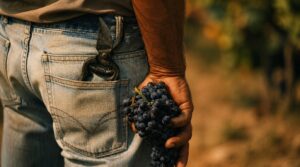
During the weeks leading up to the harvest, tasting a grape means much more than simply checking whether it is sweet.
The skin is examined, the pulp is tasted, the development of the seeds is observed, and the ripening of each vineyard plot is assessed. All these small signs help us understand the stage the fruit has reached and the possibilities it offers.
The skin provides color, aromas and structure. The pulp provides the must from which the wine will be made. The seeds influence texture and tannins, while the stem can contribute freshness and complexity in certain winemaking processes. Even the bloom plays an important role by protecting the fruit and harboring natural yeasts.
The next time you hold a bunch of grapes in your hands, look at it with fresh eyes. Pay attention to its skin, gently squeeze the pulp, observe the seeds and the thin whitish layer that protects it. Something so small is where many of the decisions begin that, months later, will ultimately result in a glass of wine.
¿Te ha gustado este artículo?