
Did you know that rosé wines are among the most consumed in the world?
Their sales grow every year in international markets, but in Spain they have yet to fully establish themselves.
Why is that? More than a lack of quality, what weighs most are certain deeply rooted prejudices.
In this article, we debunk some of the most widespread myths about rosé wine and propose something very simple: give it a chance. Because you might be overlooking one of the most versatile and surprising styles in the wine world.
It’s true that it’s more appealing in summer, but limiting its consumption to this season is a mistake.
It’s also a mistake to serve it too cold. At very low temperatures, the wine loses expression: aromas are muted, nuances disappear, and it becomes flatter on the palate.
The ideal temperature is between 10 and 12 ºC, where the wine shows balance and expression.
As for food pairing, its versatility is remarkable: rice dishes—including sushi—Thai cuisine, foie, baked fish, nuts, and even roasted meats. It’s a wine that works all year round.
This is one of the most widespread myths.
Rosé wine is made from red grapes, just like red wine. The difference lies in the maceration time: contact with the skins is brief, just enough to provide color and part of the aromatic compounds.
They should not be confused with claretes, traditionally made from a blend of white and red grapes fermented together.
Nothing could be further from the truth.
The quality of a rosé wine depends, as with any other wine, on the raw material and the winemaking process. In many cases, high-quality grapes are used, with parameters similar to those destined for aged wines.
Moreover, its production requires great technical precision. Controlling maceration time, temperature, and the preservation of primary aromas makes it one of the most demanding categories for winemakers.
It’s not uncommon for many professionals to consider rosé one of the most complex wines to produce.
This myth reflects more of a cultural construct than the reality of the product.
For years, certain marketing strategies have associated rosé with a specific aesthetic, using designs and colors that primarily appealed to a female audience. However, wine has no gender.
In fact, many rosés have structure, volume, and complexity, especially those aged in barrels, which sometimes bring them closer to profiles typical of red wines.
France, and particularly Provence, is an undeniable benchmark in the production of internationally renowned rosés. Its success has largely contributed to the global rise of this type of wine.
However, Spain has a long tradition and produces wines of great quality. Regions such as Navarra, Ribera del Duero, or Cigales stand out for the consistency of their rosés, along with areas like Valencia, Penedés, or Extremadura, where very interesting proposals are emerging.
The world of rosé wine is extraordinarily diverse.
Differences in grape varieties, regions, and winemaking methods result in very distinct profiles:
To this we can add blends, different vinification styles, and aging processes, which further expand the range of possibilities.
There is a belief that rosé wines should always be consumed young, almost immediately after production. While it’s true that many are designed to be enjoyed in their freshness, not all follow this rule.
Some rosés with greater structure, made from suitable varieties or even aged in barrels, can evolve very well in the bottle. Over time, they develop more complex nuances, spicy notes, and greater depth.
They are not the majority, but they exist—and they deserve attention.
Its light appearance can be misleading.
Many consumers associate rosé with easy or less complex wines. However, behind a good rosé there is balance, technique, and great precision in its production.
On the nose, they can offer profiles ranging from fresh red fruits to flowers, citrus, or mineral notes. On the palate, depending on the style, they can be light and refreshing or structured and persistent.
To simplify rosé is, in reality, not to know it.
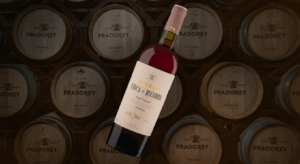
Rosé wine is neither a lesser wine nor a secondary option. It is a style with its own identity, crafted with the same care—or even more—than whites and reds.
It brings nuance, freshness, and versatility, and allows grape varieties to be rediscovered from a different perspective.
In Spain, there are high-quality rosés at very accessible prices. All it takes is leaving prejudices behind and approaching them with curiosity.
All you need to do is choose a bottle, serve it at the right temperature, and enjoy it without preconceived ideas. You might discover a new way of understanding wine.
¿Te ha gustado este artículo?